The Curious Case of Cuffing Season:
What Analysis of Birth Records Can Tell Us
Unveiling Cuffing Season Through A Comparative Analysis of Birth Records
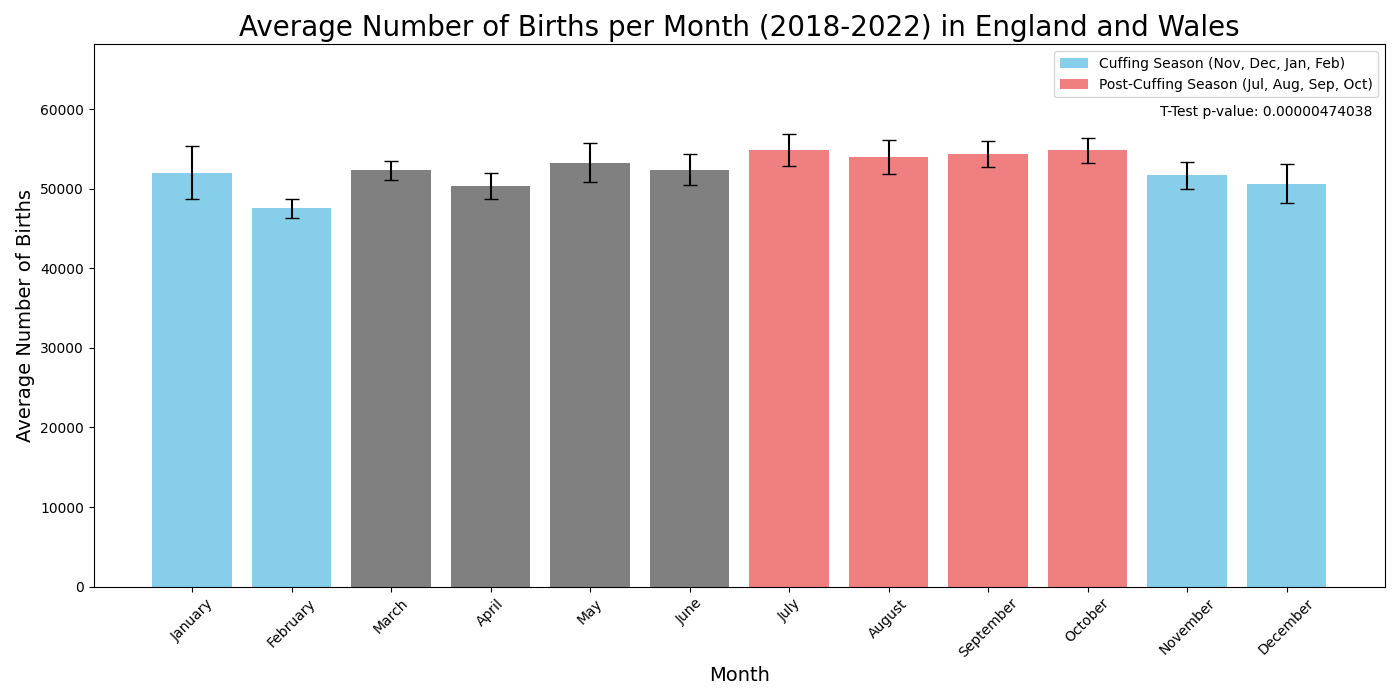
The cultural phenomenon of cuffing season, promising romantic bonds as the colder months arrive when temperatures drop and sunlight disappears, the pop culture phenomenon known as [cuffing season] is reflected in birth records. Our analysis of Canadian and English & Welsh birth records from 2018 to 2022 reveals a significant difference in the number of births during the cuffing season months of November through February compared to the elevated birth rates in the subsequent nine months from July to October.
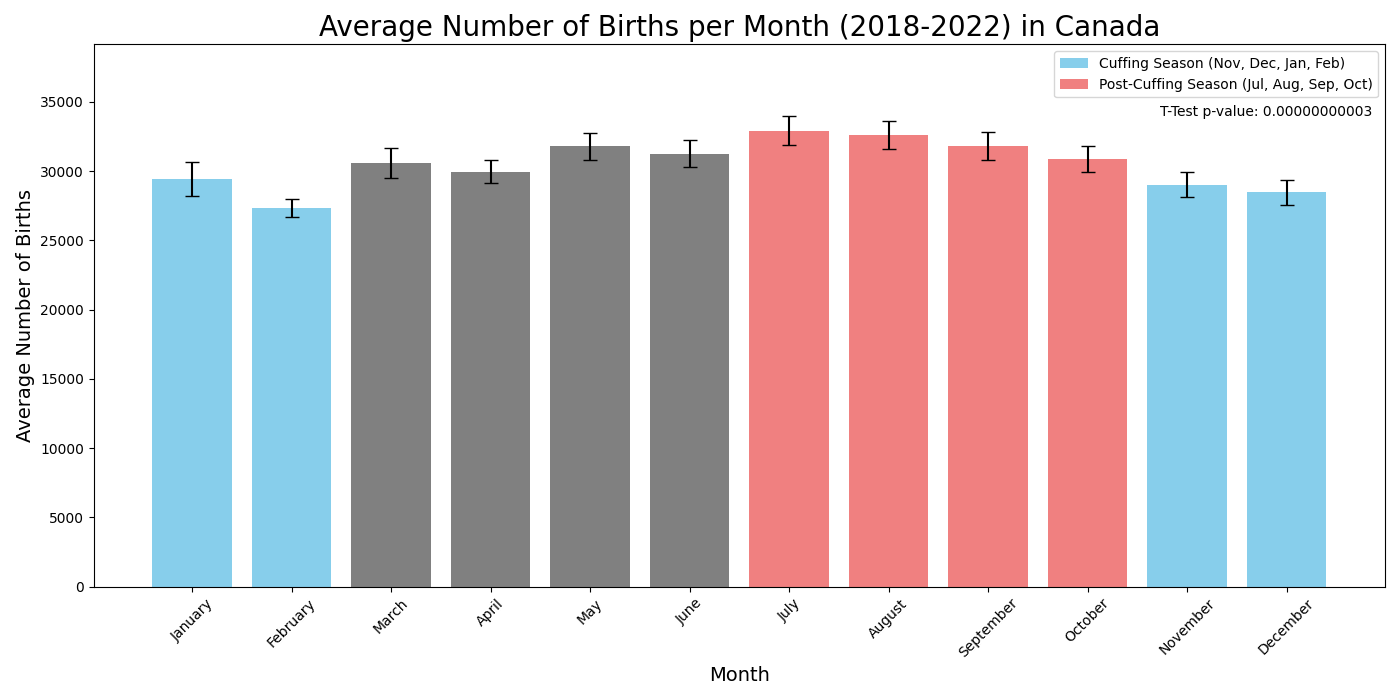
Significantly fewer births are recorded during cuffing season compared to the peak birth months that follow 9 months later, underscoring the potential impact of seasonal relationship trends. This is confirmed by statistical tests which show a significant difference in birth records during cuffing season and 9 months later.
Statistical Analysis: T-test Results For Births
Canada
The T-test statistic for cuffing season is approximately -9.195, with a notably low p-value of 3.37×10^(-11), indicating a statistically significant difference in birth numbers during cuffing season and 9 months afterwards. Furthermore, a secondary analysis contrasting the cuffing season with the 'uncuffing season' also revealed significant findings.
England and Wales
The T-test statistic for cuffing season in England and Wales stands at -5.495, with a p-value of 4.74×10^(-6), also signalling statistically significant differences in birth numbers during cuffing season and 9 months afterwards. This trend was also observed in Canadian data, likewise the comparison with the uncuffing season also showed statistically significant results.
Why Does Cuffing Season Exist? A Multifaceted Exploration
Cuffing season might sound like a meme invented by Twitter, but anyone dating in October knows it's real. Suddenly, exes who ghosted you in May are circling back, and the urge to lock down a partner before the holidays kicks in hard. While it feels like a modern trend driven by loneliness and cold weather, this winter scramble for companionship actually connects back to some pretty basic survival instincts.
Physiological Triggers
Biology isn't subtle here. When the temperature drops and it's pitch black by 4:30 PM, your body literally craves heat and serotonin. We aren't that different from hibernating bears. We want to stay inside, get under a blanket, and ideally do that with another warm human being rather than freezing alone. It's a physical reaction to the season.
Environmental Influences
With winter comes a retreat indoors. The change in environment from outdoor spaces to confined, shared settings might encourage us to form more intimate connections. We believe that our increased proximity indoors during the winter months leads to increased socialisation and, consequently, more intimate relationships.
Historical Advantages
For our ancestors, finding a partner wasn't just about avoiding loneliness. It was about staying alive. Surviving a harsh winter required sharing food, shelter, and body warmth. If you faced the cold months alone, you probably wouldn't make it to spring. That survival anxiety is still hardwired into our brains, even if the stakes aren't quite life-or-death anymore.
The Survival of Cuffing Season in Modern Times
Obviously, we have central heating and Uber Eats now. We don't technically need a partner to survive a blizzard. But the psychological drive is still there. Between the pressure of family holidays, where mom asks about your love life every five minutes, and the isolation of winter, we still look for a "plus one" to act as a buffer against the cold and the questions.
Uncuffing Season: The Flip Side
Then comes the thaw. Uncuffing season is that messy time in March or April when the sun finally comes out and everyone remembers they like being single. People treat their winter relationships like spring cleaning. Once the weather is nice enough for rooftop bars and beach trips, that desperate need for a cozy winter partner often evaporates.
How to Spend This Cuffing Season?
Most cuffing season relationships don't survive spring. DNA Romance can help you break that pattern by matching you based on genetic compatibility, so the connection is built on something deeper than just not wanting to be alone in December.
- Stop guessing and check your genetic compatibility.
- Handle the winter dating rush using actual science.
- Find a connection that actually sticks around after the snow melts.
Give DNA Romance a shot. We use science to help you find someone who actually fits you, so you aren't just filling a vacancy for the winter. Let's find you a match that lasts.
