Il Curioso Caso della Stagione degli Accoppiamenti:
Cosa Può Dirci l'Analisi dei Registri di Nascita
Svelando la stagione delle coppie attraverso un'analisi comparativa dei registri di nascita.
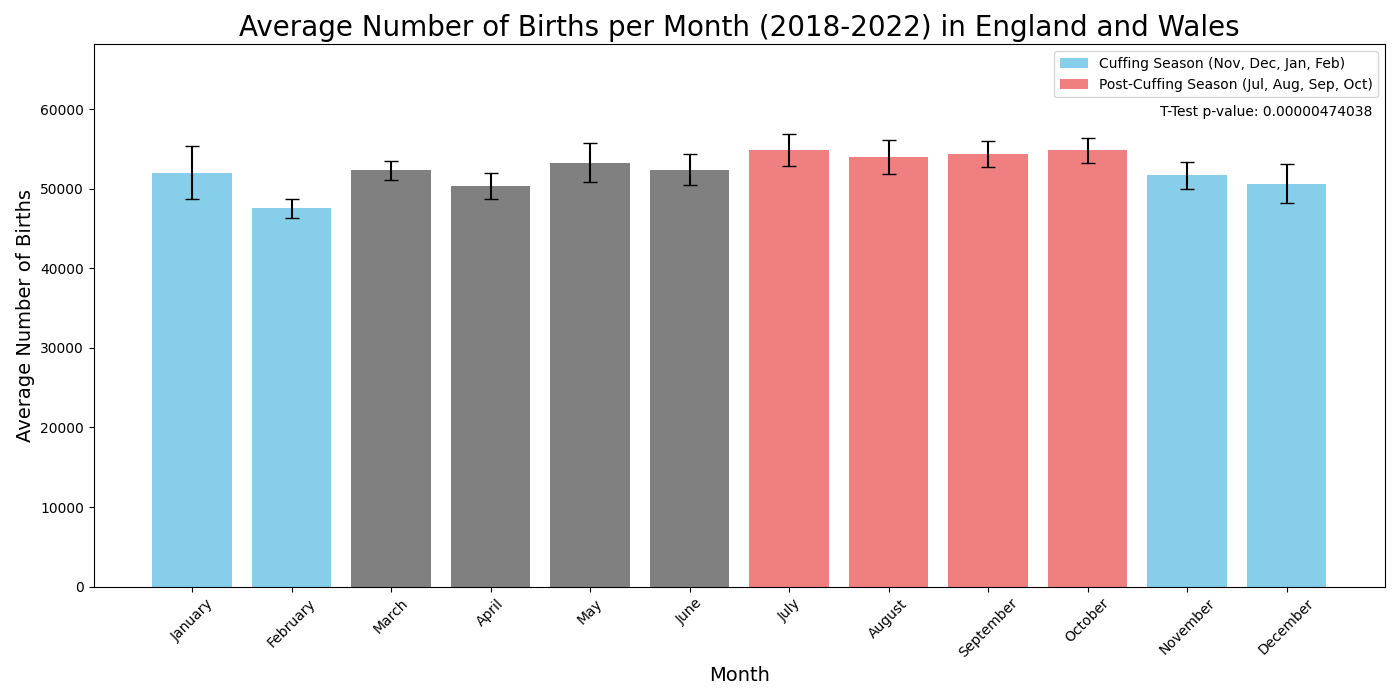
Il fenomeno culturale della stagione dei polsini, che promette legami romantici con l'arrivo dei mesi più freddi quando la temperatura scende e la luce del sole scompare, il fenomeno della cultura popolare conosciuto come [stagione dei polsini] si riflette nei registri di nascita. La nostra analisi dei registri di nascita canadesi e inglesi e gallesi dal 2018 al 2022 rivela una differenza significativa nel numero di nascite durante i mesi della stagione dei polsini, da novembre a febbraio, rispetto ai tassi di nascita elevati nei successivi nove mesi da luglio a ottobre.
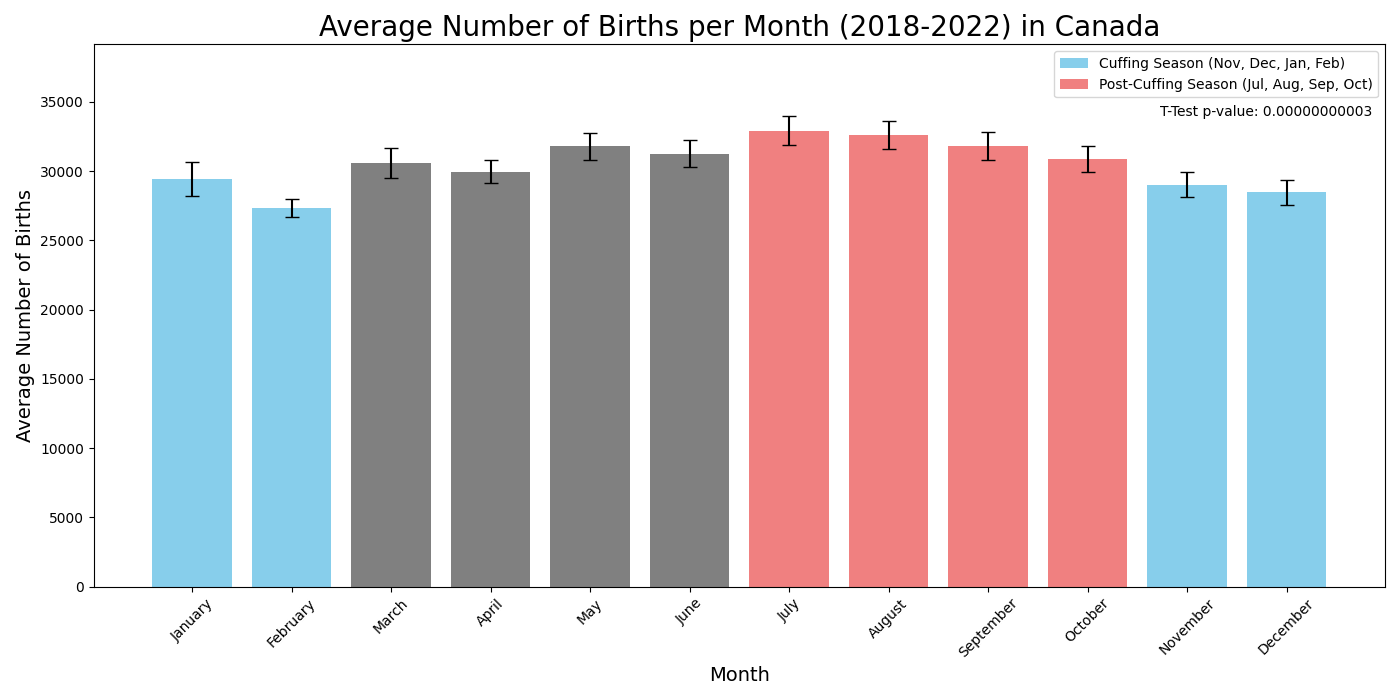
Un numero significativamente inferiore di nascite viene registrato durante la stagione delle coppie rispetto ai mesi di picco delle nascite che seguono 9 mesi dopo, sottolineando il potenziale impatto delle tendenze stagionali nelle relazioni. Ciò è confermato da test statistici che mostrano una differenza significativa nei registri delle nascite durante la stagione delle coppie e 9 mesi dopo.
Analisi statistica: Risultati del test t per i nati.
Canada. Canada.
Il valore di T-test per la stagione del "cuffing" è approssimativamente -9.195, con un p-value notevolmente basso di 3.37×10^(-11), indicando una differenza statisticamente significativa nei numeri di nascita durante la stagione del "cuffing" e 9 mesi dopo. Inoltre, un'analisi secondaria che confronta la stagione del "cuffing" con la stagione del "uncuffing" ha rivelato anche risultati significativi.
Inghilterra e Galles.
La statistica del test T per la stagione del cuffing in Inghilterra e Galles è di -5,495, con un valore p di 4,74×10^(-6), segnalando anche una differenza statisticamente significativa nei numeri di nascita durante la stagione del cuffing e 9 mesi dopo. Questa tendenza è stata osservata anche nei dati del Canada, allo stesso modo il confronto con la stagione del decuffing ha mostrato risultati statisticamente significativi.
Perché esiste la stagione dei polsini? Un'esplorazione multifaccettata.
Cuffing season might sound like a meme invented by Twitter, but anyone dating in October knows it's real. Suddenly, exes who ghosted you in May are circling back, and the urge to lock down a partner before the holidays kicks in hard. While it feels like a modern trend driven by loneliness and cold weather, this winter scramble for companionship actually connects back to some pretty basic survival instincts.
Stimoli fisiologici
Biology isn't subtle here. When the temperature drops and it's pitch black by 4:30 PM, your body literally craves heat and serotonin. We aren't that different from hibernating bears. We want to stay inside, get under a blanket, and ideally do that with another warm human being rather than freezing alone. It's a physical reaction to the season.
Influenze ambientali
Con l'inverno arriva un ritiro al chiuso. Il cambiamento dell'ambiente dagli spazi esterni a quelli confinati e condivisi potrebbe spingerci verso la formazione di connessioni più intime. Crediamo che la nostra maggiore vicinanza al chiuso durante i mesi invernali porti a una maggiore socializzazione e, di conseguenza, a relazioni più intime.
Vantaggi storici.
For our ancestors, finding a partner wasn't just about avoiding loneliness. It was about staying alive. Surviving a harsh winter required sharing food, shelter, and body warmth. If you faced the cold months alone, you probably wouldn't make it to spring. That survival anxiety is still hardwired into our brains, even if the stakes aren't quite life-or-death anymore.
La sopravvivenza della stagione dei polsini ai tempi moderni.
Obviously, we have central heating and Uber Eats now. We don't technically need a partner to survive a blizzard. But the psychological drive is still there. Between the pressure of family holidays, where mom asks about your love life every five minutes, and the isolation of winter, we still look for a "plus one" to act as a buffer against the cold and the questions.
Stagione di svincolo: Il lato opposto.
Then comes the thaw. Uncuffing season is that messy time in March or April when the sun finally comes out and everyone remembers they like being single. People treat their winter relationships like spring cleaning. Once the weather is nice enough for rooftop bars and beach trips, that desperate need for a cozy winter partner often evaporates.
Come trascorrere questa stagione di accoppiamento?
Most cuffing season relationships don't survive spring. DNA Romance can help you break that pattern by matching you based on genetic compatibility, so the connection is built on something deeper than just not wanting to be alone in December.
- Stop guessing and check your genetic compatibility.
- Handle the winter dating rush using actual science.
- Find a connection that actually sticks around after the snow melts.
Give DNA Romance a shot. We use science to help you find someone who actually fits you, so you aren't just filling a vacancy for the winter. Let's find you a match that lasts.
