De Curieuze Zaak van Cuffing Season:
Wat Analyse van Geboorterecords Ons Kan Vertellen
Onthulling van Cuffing Season door middel van een vergelijkende analyse van geboorteregisters
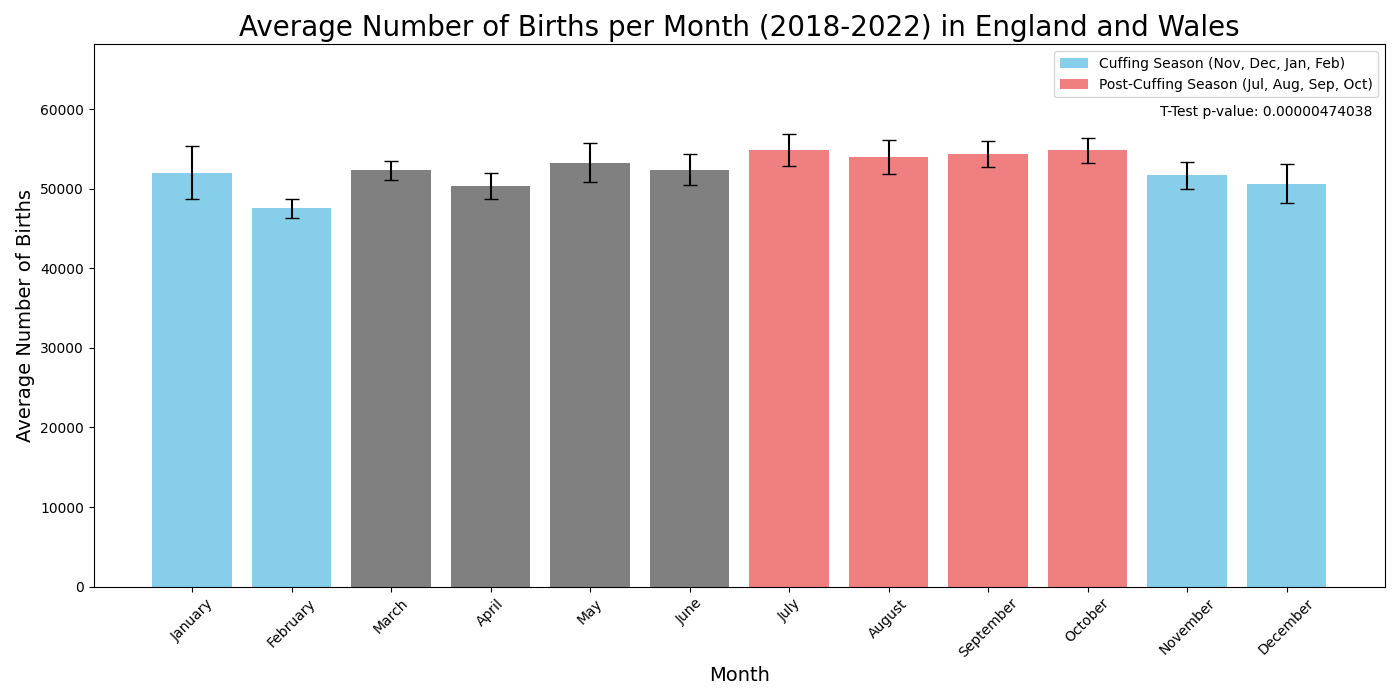
Het culturele fenomeen van 'cuffing season', dat romantische banden belooft als de koudere maanden aanbreken wanneer de temperatuur daalt en het zonlicht verdwijnt, wordt weerspiegeld in geboorteregisters. Onze analyse van Canadese en Engelse & Welsh geboorteregistraties van 2018 tot 2022 toont aan dat er een significant verschil is in het aantal geboortes tijdens de maanden van cuffing season, van november tot februari, in vergelijking met de verhoogde geboortecijfers in de daaropvolgende negen maanden van juli tot oktober.
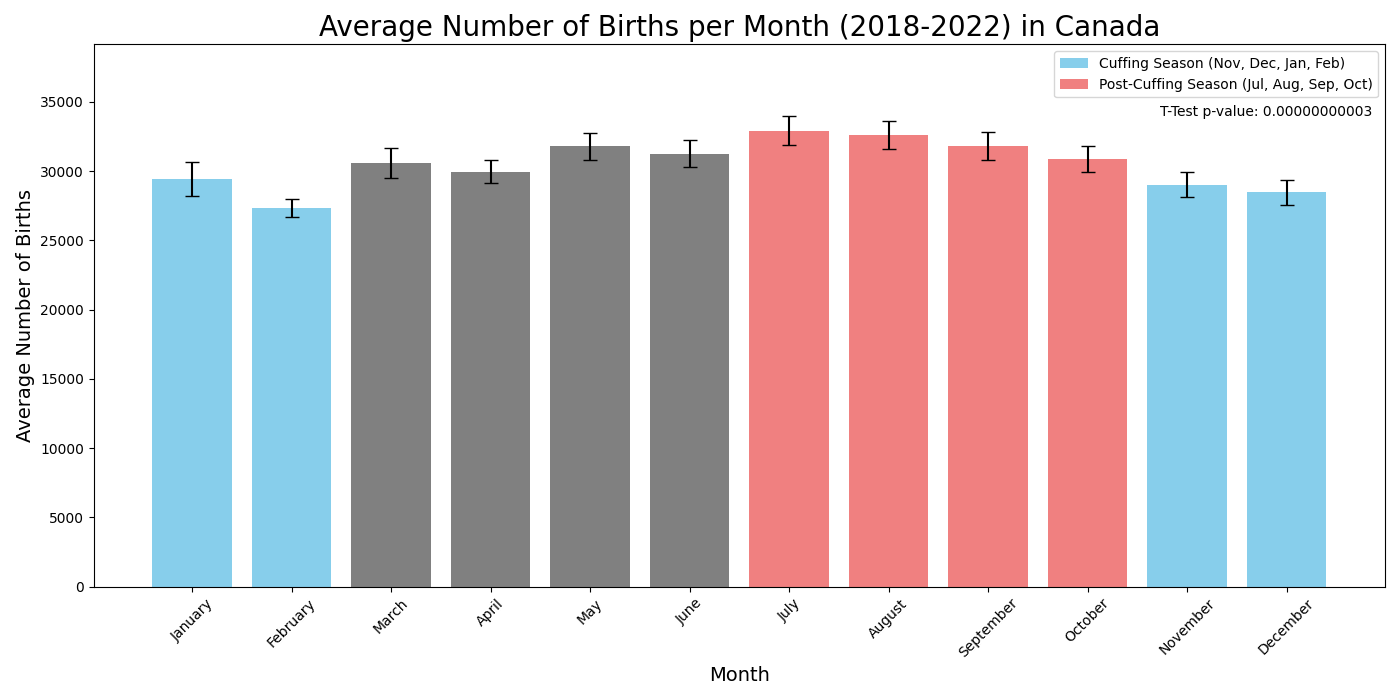
Er worden significant minder geboortes geregistreerd tijdens cuffing season in vergelijking met de piekmaanden die 9 maanden later volgen, wat de potentiële impact van seizoensgebonden relatietrends benadrukt. Dit wordt bevestigd door statistische tests die een significant verschil laten zien in geboorteregistraties tijdens cuffing season en 9 maanden later.
Statistische analyse: T-testresultaten voor geboorten
Canada" Nederlands: "Canada
De T-test statistiek voor cuffing season is ongeveer -9,195, met een opmerkelijk lage p-waarde van 3,37 × 10 ^ (-11), wat aangeeft dat er een statistisch significant verschil is in geboortecijfers tijdens cuffing season en 9 maanden daarna. Bovendien heeft een secundaire analyse die de cuffing season vergelijkt met de 'uncuffing season' ook significante bevindingen opgeleverd.
Engeland en Wales
De T-teststatistiek voor het 'cuffing season' in Engeland en Wales is -5,495, met een p-waarde van 4,74×10^(-6), wat ook aangeeft dat er statistisch significante verschillen zijn in geboortecijfers tijdens het 'cuffing season' en 9 maanden daarna. Deze trend werd ook waargenomen in Canadese gegevens, evenals de vergelijking met het 'uncuffing season', die ook statistisch significante resultaten liet zien.
Waarom bestaat Cuffing Season? Een meerzijdige verkenning
Cuffing season might sound like a meme invented by Twitter, but anyone dating in October knows it's real. Suddenly, exes who ghosted you in May are circling back, and the urge to lock down a partner before the holidays kicks in hard. While it feels like a modern trend driven by loneliness and cold weather, this winter scramble for companionship actually connects back to some pretty basic survival instincts.
Fysiologische triggers
Biology isn't subtle here. When the temperature drops and it's pitch black by 4:30 PM, your body literally craves heat and serotonin. We aren't that different from hibernating bears. We want to stay inside, get under a blanket, and ideally do that with another warm human being rather than freezing alone. It's a physical reaction to the season.
Milieu-invloeden
Met de winter komt een terugtrekking naar binnen. De verandering van omgeving van buitenruimtes naar gesloten, gedeelde omgevingen kan ons aanzetten tot het vormen van intiemere verbindingen. Wij geloven dat onze toegenomen nabijheid binnen tijdens de wintermaanden leidt tot meer socialisatie en, als gevolg daarvan, meer intieme relaties.
Historische voordelen
For our ancestors, finding a partner wasn't just about avoiding loneliness. It was about staying alive. Surviving a harsh winter required sharing food, shelter, and body warmth. If you faced the cold months alone, you probably wouldn't make it to spring. That survival anxiety is still hardwired into our brains, even if the stakes aren't quite life-or-death anymore.
Overleven van Cuffing Seizoen in Moderne Tijden
Obviously, we have central heating and Uber Eats now. We don't technically need a partner to survive a blizzard. But the psychological drive is still there. Between the pressure of family holidays, where mom asks about your love life every five minutes, and the isolation of winter, we still look for a "plus one" to act as a buffer against the cold and the questions.
Seizoen van Ontkoppeling: De andere kant
Then comes the thaw. Uncuffing season is that messy time in March or April when the sun finally comes out and everyone remembers they like being single. People treat their winter relationships like spring cleaning. Once the weather is nice enough for rooftop bars and beach trips, that desperate need for a cozy winter partner often evaporates.
Hoe deze cuffing seizoen door te brengen?
Most cuffing season relationships don't survive spring. DNA Romance can help you break that pattern by matching you based on genetic compatibility, so the connection is built on something deeper than just not wanting to be alone in December.
- Stop guessing and check your genetic compatibility.
- Handle the winter dating rush using actual science.
- Find a connection that actually sticks around after the snow melts.
Give DNA Romance a shot. We use science to help you find someone who actually fits you, so you aren't just filling a vacancy for the winter. Let's find you a match that lasts.
