O Curioso Caso da Temporada de Cuffing:
O Que a Análise de Registros de Nascimento Pode Nos Dizer
Revelando a Estação de Namoro através de uma Análise Comparativa de Registros de Nascimento
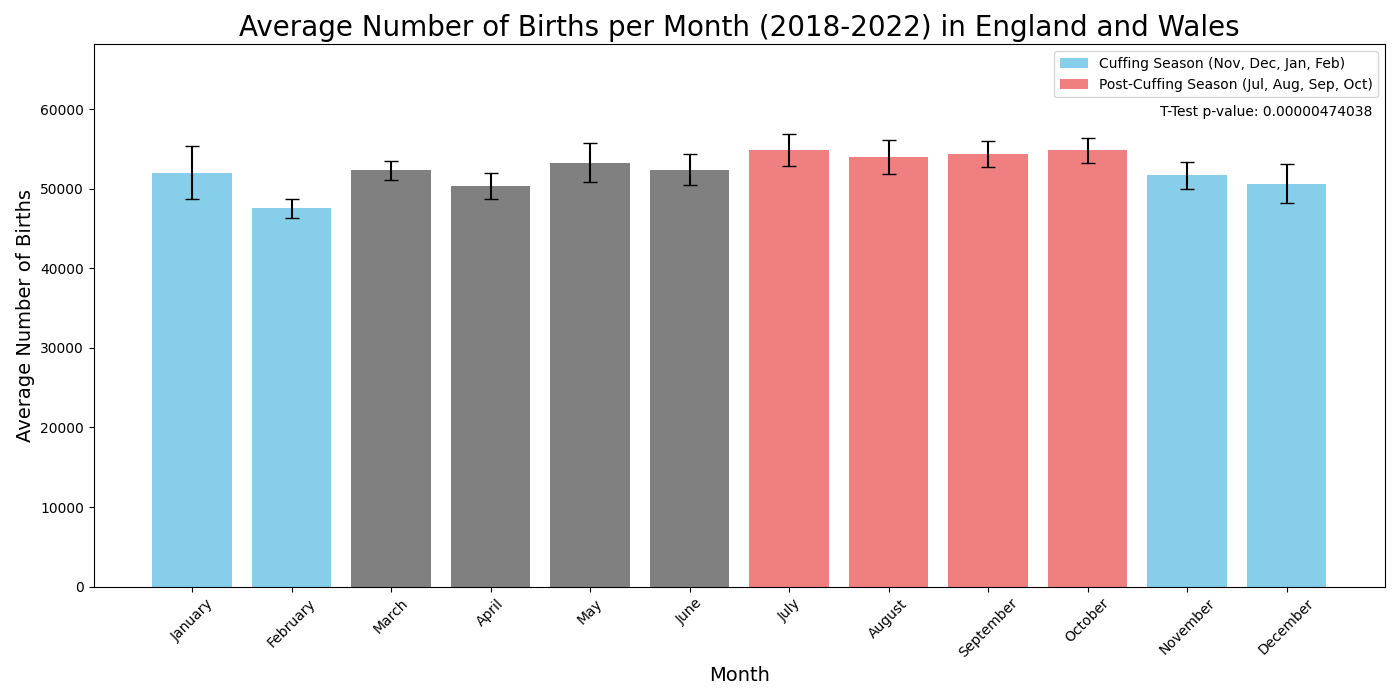
O fenômeno cultural da temporada de punhos, prometendo laços românticos à medida que as temperaturas mais frias chegam e a luz do sol desaparece, o fenômeno da cultura pop conhecido como [temporada de punhos] é refletido nos registros de nascimento. Nossa análise dos registros de nascimento canadenses e ingleses e galeses de 2018 a 2022 revela uma diferença significativa no número de nascimentos durante os meses da temporada de punhos de novembro a fevereiro, em comparação com as taxas de nascimento elevadas nos nove meses subsequentes de julho a outubro.
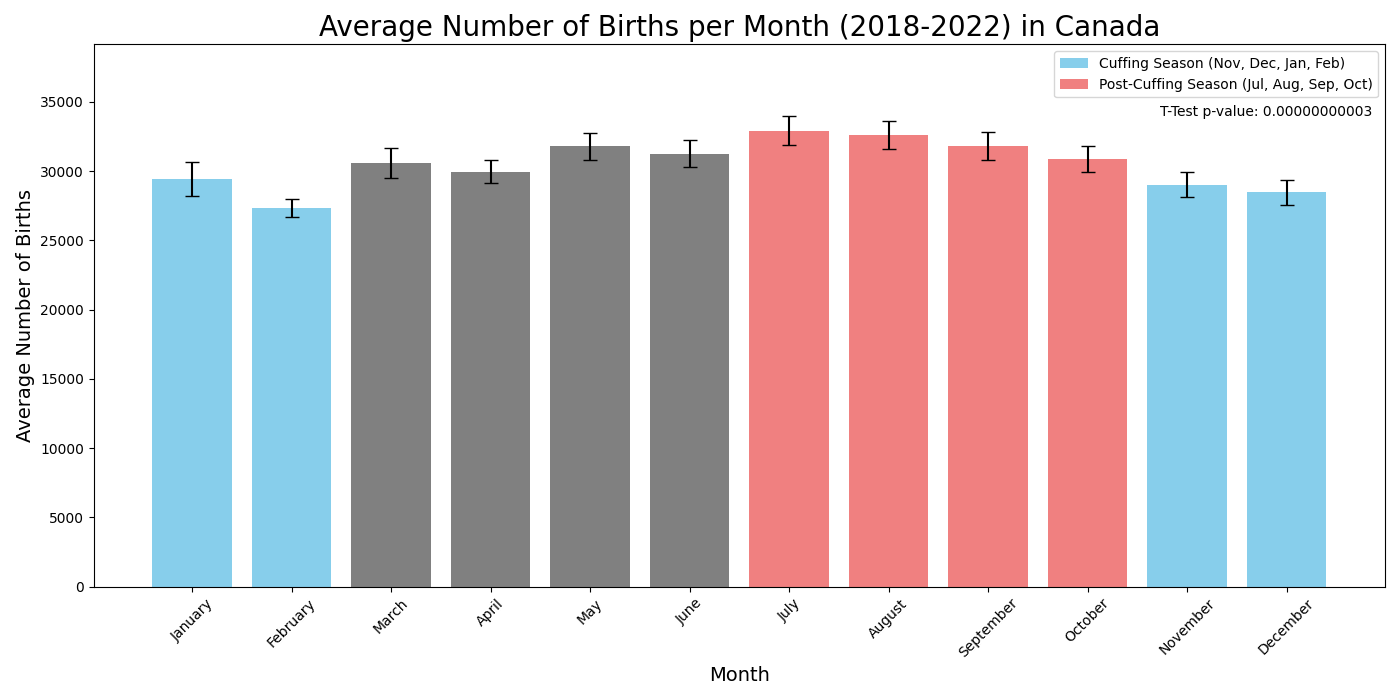
Testes estatísticos mostram uma diferença significativa nos registros de nascimento durante a temporada de encaixe e 9 meses depois, o que reforça o potencial impacto das tendências sazonais de relacionamento. Registros de nascimento significativamente menores são registrados durante a temporada de encaixe em comparação com os meses de nascimento máximos que se seguem 9 meses depois.
Análise Estatística: Resultados do Teste T para Nascimentos
Canada
O estatístico T-test para a temporada de acoplamento é aproximadamente -9,195, com um valor-p notavelmente baixo de 3,37 × 10 ^ (-11), indicando uma diferença estatisticamente significativa nos números de nascimento durante a temporada de acoplamento e 9 meses depois. Além disso, uma análise secundária contrastando a temporada de acoplamento com a 'temporada de desacoplamento' também revelou resultados significativos.
Inglaterra e País de Gales
O estatístico T-test para a temporada de acoplamento na Inglaterra e no País de Gales é de -5,495, com um valor-p de 4,74 × 10 ^ (-6), também indicando diferenças estatisticamente significativas nos números de nascimento durante a temporada de acoplamento e nos 9 meses seguintes. Esta tendência também foi observada nos dados canadenses, da mesma forma, a comparação com a temporada de desacoplamento também mostrou resultados estatisticamente significativos.
Por que a Estação de Presilhas Existe? Uma Exploração Multifacetada
Cuffing season might sound like a meme invented by Twitter, but anyone dating in October knows it's real. Suddenly, exes who ghosted you in May are circling back, and the urge to lock down a partner before the holidays kicks in hard. While it feels like a modern trend driven by loneliness and cold weather, this winter scramble for companionship actually connects back to some pretty basic survival instincts.
Gatilhos Fisiológicos
Biology isn't subtle here. When the temperature drops and it's pitch black by 4:30 PM, your body literally craves heat and serotonin. We aren't that different from hibernating bears. We want to stay inside, get under a blanket, and ideally do that with another warm human being rather than freezing alone. It's a physical reaction to the season.
Influências Ambientais
Com o inverno vem um retiro para dentro. A mudança no ambiente de espaços externos para ambientes confinados e compartilhados pode nos empurrar para formar conexões mais íntimas. Acreditamos que nossa maior proximidade dentro de casa durante os meses de inverno leva a uma maior socialização e, consequentemente, a relações mais íntimas.
Vantagens Históricas
For our ancestors, finding a partner wasn't just about avoiding loneliness. It was about staying alive. Surviving a harsh winter required sharing food, shelter, and body warmth. If you faced the cold months alone, you probably wouldn't make it to spring. That survival anxiety is still hardwired into our brains, even if the stakes aren't quite life-or-death anymore.
A Sobrevivência da Estação de Cuffing nos Tempos Modernos
Obviously, we have central heating and Uber Eats now. We don't technically need a partner to survive a blizzard. But the psychological drive is still there. Between the pressure of family holidays, where mom asks about your love life every five minutes, and the isolation of winter, we still look for a "plus one" to act as a buffer against the cold and the questions.
Temporada de Desamarrar: O Lado Inverso
Then comes the thaw. Uncuffing season is that messy time in March or April when the sun finally comes out and everyone remembers they like being single. People treat their winter relationships like spring cleaning. Once the weather is nice enough for rooftop bars and beach trips, that desperate need for a cozy winter partner often evaporates.
Como passar esta temporada de amarração?
Most cuffing season relationships don't survive spring. DNA Romance can help you break that pattern by matching you based on genetic compatibility, so the connection is built on something deeper than just not wanting to be alone in December.
- Stop guessing and check your genetic compatibility.
- Handle the winter dating rush using actual science.
- Find a connection that actually sticks around after the snow melts.
Give DNA Romance a shot. We use science to help you find someone who actually fits you, so you aren't just filling a vacancy for the winter. Let's find you a match that lasts.
